
Unlocking Precision In Measurement: Innovative Metrology Solutions
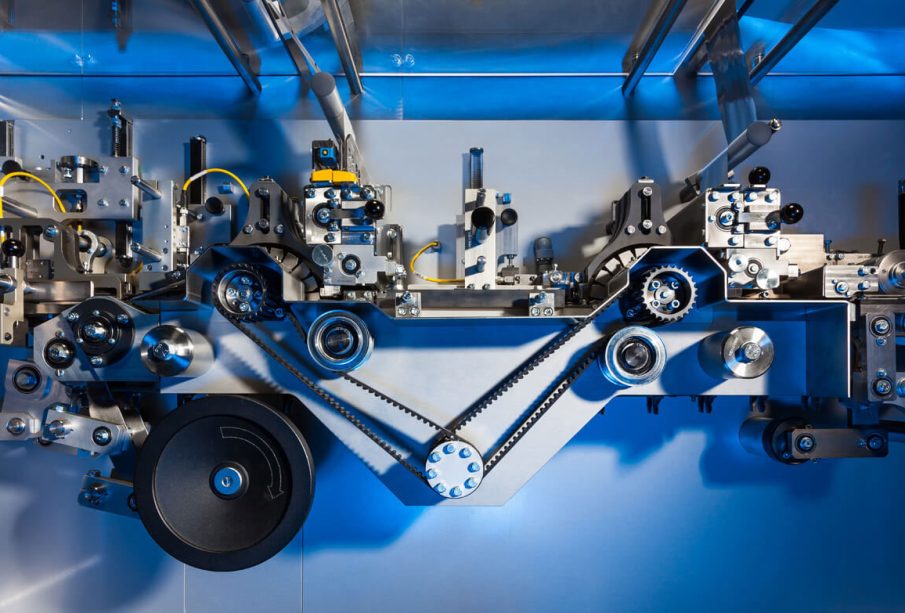
The Art of Metrology: Understanding Precision in Measurement
The Science Behind Measurement Standards
Metrology, the science of measurement, serves as the backbone for industries ranging from aerospace to pharmaceuticals. Measurement standards are the benchmarks against which all other measurements are compared; they form the foundation of metrology. The International System of Units (SI) defines these standards, ensuring global consistency in measurement practices. The significance of measurement standards lies not only in their ability to quantify dimensions and quantities but also in their role in establishing credibility in scientific research, manufacturing, and commerce. A key challenge in the world of standards is maintaining traceability, which ensures that measurements can be reliably compared to the unifying, global standards. This traceability is achieved through a hierarchy of calibrations, from the primary standards held by national metrology institutes down to the operational standards used in industries. The precise definition of units like the meter, kilogram, and second is underpinned by constants of nature, ensuring that measurements remain consistent and universally applicable, a necessity for international trade and cooperation.
The Evolution of Metrology: From Ancient Tools to Modern Techniques
The history of metrology is as rich as it is varied, dating back thousands of years. In ancient civilizations, tools such as the cubit rod in Egypt or the Roman foot laid the groundwork for basic measurements of length. However, the move towards precision began in the 17th century with the invention of scientific instruments like the telescope and the microscope, which expanded our understanding of measurement. The establishment of the metric system in the late 18th century marked a crucial turning point, providing a more systematic approach to measurement. The 20th century saw rapid advancements with the introduction of electronic measurement technology, significantly enhancing both accuracy and repeatability. Today, modern metrology harnesses sophisticated tools such as laser interferometers and atomic clocks, employing techniques that can measure distances to billionths of a meter or frequencies with unfathomable accuracy. This ongoing evolution drives innovation across diverse sectors, enhancing quality assurance and safety protocols and facilitating breakthroughs in technology and science.
Innovative Technologies Transforming Metrology
How Artificial Intelligence is Revolutionizing Measurement Accuracy
Artificial Intelligence (AI) is at the forefront of a revolution in metrology, transforming the landscape of measurement through enhanced data processing and analysis capabilities. The integration of AI algorithms, particularly in data analytics and machine learning, enables unprecedented levels of precision and speed in measurement tasks. By utilizing vast datasets, AI can predict and identify measurement inaccuracies that previously went undetected. Furthermore, AI-driven systems can automate calibration processes, enhancing efficiency and reducing human error. They can learn from previous measurements and adapt to new conditions, resulting in dynamic calibration protocols that are continually optimized. The ability of AI to perform real-time analysis and adjustment leads to improved quality control in manufacturing processes, thereby reducing waste and ensuring product reliability. As industries increasingly rely on complex machinery and automation, the synergy between AI and metrology will be pivotal, not just in accuracy but also in maintaining rigorous standards of compliance and safety.
The Impact of 3D Printing on Metrological Practices
3D printing, or additive manufacturing, is revolutionizing various aspects of production and design, propelling metrology into a new realm of possibilities. This technology allows for the rapid prototyping and fabrication of complex geometries that were previously unattainable through traditional manufacturing methods. However, this shift necessitates rigorous metrological practices to ensure that 3D-printed components meet dimensional tolerances and specifications. Metrology plays an essential role in the additive manufacturing process, from validating computer-aided design (CAD) files to inspecting the finished product. Technologies such as laser scanning and coordinate measuring machines (CMM) are employed to gather detailed data on the geometry of printed parts. The challenge lies in developing standardized measurement techniques tailored for 3D-printed items, as traditional methods might not adequately address their unique characteristics. Coupled with advancements in software, these innovations will ensure that 3D printed products not only meet but exceed the stringent standards of the industries they serve, be it aerospace, automotive, or healthcare.
Applications of Advanced Metrology Solutions in Various Industries
Metrology in Aerospace: Ensuring Safe Skies and Precision Engineering
The aerospace industry exemplifies the critical role of metrology in ensuring safety and reliability at every stage, from design to flight operations. In this high-stakes environment, measurement precision is paramount; even minute errors can have catastrophic consequences. Metrology solutions help in several key areas of aerospace engineering, including the fabrication of intricate components, the assembly of aircraft, and the ongoing maintenance of fleets. High-performance measurement tools such as laser trackers and photogrammetry systems ensure that all components meet the exact specifications required for safety. Moreover, with the increasing complexity of aircraft designs and the use of composite materials, metrological advancements such as non-destructive testing (NDT) are becoming essential. NDT techniques allow engineers to evaluate the integrity of components without disrupting their functionality, thereby ensuring continuous safety throughout an aircraft’s lifecycle. Furthermore, as the industry pivots towards greater automation and the adoption of Smart Manufacturing practices, metrology will play a critical role in facilitating real-time monitoring and control, ensuring that safety standards continue to rise.
The Role of Metrology in the Pharmaceutical World: Analyzing Small Wonders
The pharmaceutical industry relies heavily on precise metrological practices to ensure that medications are safe, effective, and of high quality. Here, metrology intersects with biochemistry, pharmacology, and engineering to develop and refine processes that produce reliable drugs. From the formulation of active ingredients to the packaging of final products, every step requires stringent measurement protocols. Advanced metrology technologies allow for accurate measuring of both physical properties, such as concentration and particle size, and bioactive effects at micro-scales. Regulatory frameworks, such as those established by the Food and Drug Administration (FDA), mandate validation of manufacturing processes through robust metrology practices, ensuring consistency and compliance with stringent safety standards. Furthermore, the increasing complexity of drug formulations, particularly in biotechnology and complex medicines like gene and cell therapies, calls for innovations in measurement techniques, including advanced spectroscopy and high-throughput screening methods. The evolution of metrology within this sector not only safeguards public health but also fosters innovation in drug development, ultimately leading to better patient outcomes.
The Future of Metrology: Trends and Predictions
Digital Twin Technology and Its Influence on Precision Measurement
Digital twin technology is set to revolutionize metrology by creating real-time virtual replicas of physical systems. This innovation enables industries to simulate conditions, design processes, and measurement applications without the constraints of physical experimentation. In the context of metrology, digital twins can be utilized to mirror actual measurement systems, allowing for extensive testing and validation before implementation in the real world. By analyzing the data from digital twins, companies can optimize metrological processes, improve accuracy, and enhance predictive maintenance. This dynamic approach facilitates rapid adjustments in manufacturing environments, ultimately leading to reduced downtimes and increased operational efficiency. As industries adopt this technology, the relationship between digital twins and metrology will grow increasingly complex, opening new avenues for quality assurance and precision engineering. With an increased focus on data integrity and security, digital twins will enable organizations to streamline their compliance with regulatory standards while fostering innovation across sectors.
Sustainability in Metrology: A Greener Approach to Accuracy
Sustainability has become a major focus across all industries, including metrology, as organizations strive to minimize their environmental impact while maximizing efficiency. Sustainable metrology solutions aim to reduce waste, energy consumption, and resource use through innovative measurement practices. This development entails not just using energy-efficient technologies but also embracing holistic approaches that consider the entire lifecycle of measurement instruments and systems. For instance, the calibration and maintenance of measurement devices can be optimized to prolong their lifespan and reduce the frequency of disposal. Moreover, advancements in environmentally friendly materials for both equipment and measuring solutions are being introduced, significantly reducing the ecological footprint of metrology practices. As consumers and regulators demand greater accountability regarding environmental impact, the drive for sustainable metrology will likely become a unifying theme in the evolution of precision measurement, aligning operational goals with global sustainability initiatives. Organizations that prioritize this greener approach will find themselves better positioned to succeed in a highly competitive and increasingly conscientious market.
FAQ
Question: What are some historical examples of ancient measurement tools used in metrology? – Ancient civilizations relied on tools such as the cubit rod in Egypt and the Roman foot for basic measurements of length, which laid the foundation for early metrological practices.
Question: How does digital twin technology specifically enhance metrology practices? – Digital twin technology allows for the creation of real-time virtual replicas of physical measurement systems, enabling extensive testing, optimization of processes, and improved accuracy before real-world implementation.
Question: What measures are taken to ensure traceability in measurement standards? – Traceability in measurement standards is maintained through a hierarchy of calibrations connecting primary standards at national metrology institutes to operational standards used in various industries, ensuring reliable comparisons across measurements.
Question: How does AI contribute to reducing human error in metrology? – AI enhances metrology by automating calibration processes and analyzing vast datasets to predict and identify measurement inaccuracies, which significantly reduces the instances of human error during measurements.
Question: What role does metrology play in ensuring 3D printed components meet industry standards? – In 3D printing, metrology is crucial for validating CAD files and inspecting finished parts to ensure they adhere to dimensional tolerances and specifications, facilitating compliance with industry requirements.
Question: How important is high-performance measurement technology in the aerospace industry? – High-performance measurement technology, such as laser trackers and photogrammetry systems, is vital in aerospace for ensuring that components meet stringent safety specifications, as even minor measurement errors can lead to serious consequences.
Question: What advancements are being made in pharmaceutical metrology to ensure drug safety? – The pharmaceutical industry is utilizing advanced metrology technologies like spectroscopy and high-throughput screening methods to accurately measure properties at micro-scales, thus ensuring drug formulations remain safe and effective.
Question: How does sustainability influence modern metrological practices? – Sustainability in metrology aims to minimize environmental impact through waste reduction, energy efficiency, and the use of eco-friendly materials, aligning measurement practices with global sustainability efforts and regulatory demands.
Useful Resources
- International Organization for Standardization (ISO)
- International Bureau of Weights and Measures (BIPM)
- National Institute of Standards and Technology (NIST)
- American Society of Mechanical Engineers (ASME)
- ASTM International
- International Metrology Research Centre (IMETRY)
- Digital Twin Consortium
- The Engineers Journey – Metrology Resources