Photography Guide for Beginners | Essential Skills, Techniques & FAQs
Photography is both a creative and technical craft that enables us to capture meaningful moments, express ideas visually, and document the world. Whether you’re using a smartphone or a professional camera, understanding the foundational principles can dramatically improve your results.
What Is Photography?
Photography is the art of capturing light to create an image. This involves controlling exposure, composition, and perspective while using various tools such as lenses, sensors, and lighting equipment. With technology advancing rapidly, photography now spans everything from DSLRs and mirrorless cameras to drones and mobile devices.
Essential Components of Photography
Camera Types
DSLR Cameras
-
Feature optical viewfinders and fast autofocus
-
Excellent for action, wildlife, and low-light situations
-
Provide a wide range of lenses
Mirrorless Cameras
-
Lightweight and compact
-
Use electronic viewfinders
-
Offer advanced autofocus and video capabilities
Smartphone Cameras
-
Highly accessible and easy to use
-
Equipped with computational photography
-
Great for social media and everyday shooting
Understanding Exposure
Exposure determines how light or dark an image appears. It is influenced by three core settings known as the exposure triangle.
Aperture (f-stop)
Controls how much light enters the lens
-
Wide aperture (e.g., f/1.8): more light, shallow depth of field
-
Narrow aperture (e.g., f/16): less light, deeper depth of field
Shutter Speed
Dictates how long the sensor is exposed to light
-
Fast speeds freeze motion
-
Slow speeds create motion blur or light trails
ISO
Adjusts the camera sensor’s sensitivity
-
Low ISO keeps images clean and detailed
-
High ISO increases brightness but may introduce noise
Composition Techniques
Rule of Thirds
Divide the frame into a 3×3 grid and place key subjects along the lines or intersections for a balanced composition.
Leading Lines
Use paths, roads, or architectural lines to guide the viewer’s eyes toward the main subject.
Framing
Objects like windows, branches, or doorways can create a natural frame that highlights the subject.
Symmetry and Patterns
Symmetry adds harmony, while patterns introduce rhythm and visual interest.
Importance of Lighting
Natural Light
Soft morning or evening light creates warm tones and flattering shadows. Cloudy days offer diffused, even illumination.
Artificial Light
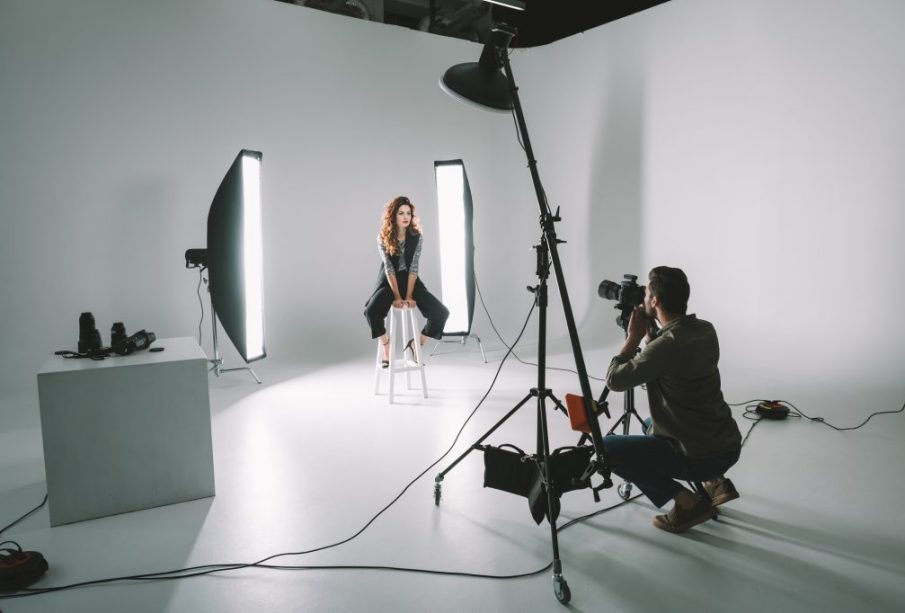
Studio lights, LED panels, and flashes allow full control over brightness and shadows, essential for portraits and product shots.
Backlighting
Shooting with the light behind the subject can create silhouettes or dramatic highlights, depending on exposure settings.
Practical Tips to Improve Your Photography
Learn to Shoot in Manual Mode
Mastering manual settings gives full creative control and helps you understand how exposure elements interact.
Keep Your Lens Clean
Dust or smudges can affect image quality, especially in bright scenes.
Experiment Frequently
Try different angles, distances, and lighting conditions to refine your style and find what works best.
Edit Thoughtfully
Post-processing enhances photos but should never overpower the original vision. Tools like Lightroom or mobile editors help adjust color, contrast, and sharpness.
FAQs
1. What camera should a beginner start with?
Most beginners do well with a mirrorless camera or an advanced smartphone because they are easy to use and lightweight.
2. How can I avoid blurry photos?
Use faster shutter speeds, stabilize your camera, or enable optical image stabilization.
3. Do I need expensive equipment to take good photos?
Not necessarily. Skill, composition, and light matter more than gear.
4. What is the best time of day for photography?
The golden hour—shortly after sunrise and before sunset—offers soft, warm lighting.
5. How do I make my portraits look more natural?
Encourage your subject to relax, use soft lighting, and avoid forcing poses.
6. What is RAW format, and should I use it?
RAW files contain unprocessed image data, offering greater flexibility in editing.
7. How do I improve composition quickly?
Practice using the rule of thirds, simplify your frame, and observe how professionals compose their shots.